

Learn more about PCOD Weight Loss and how it relates to women's health and PCOS management.
Read more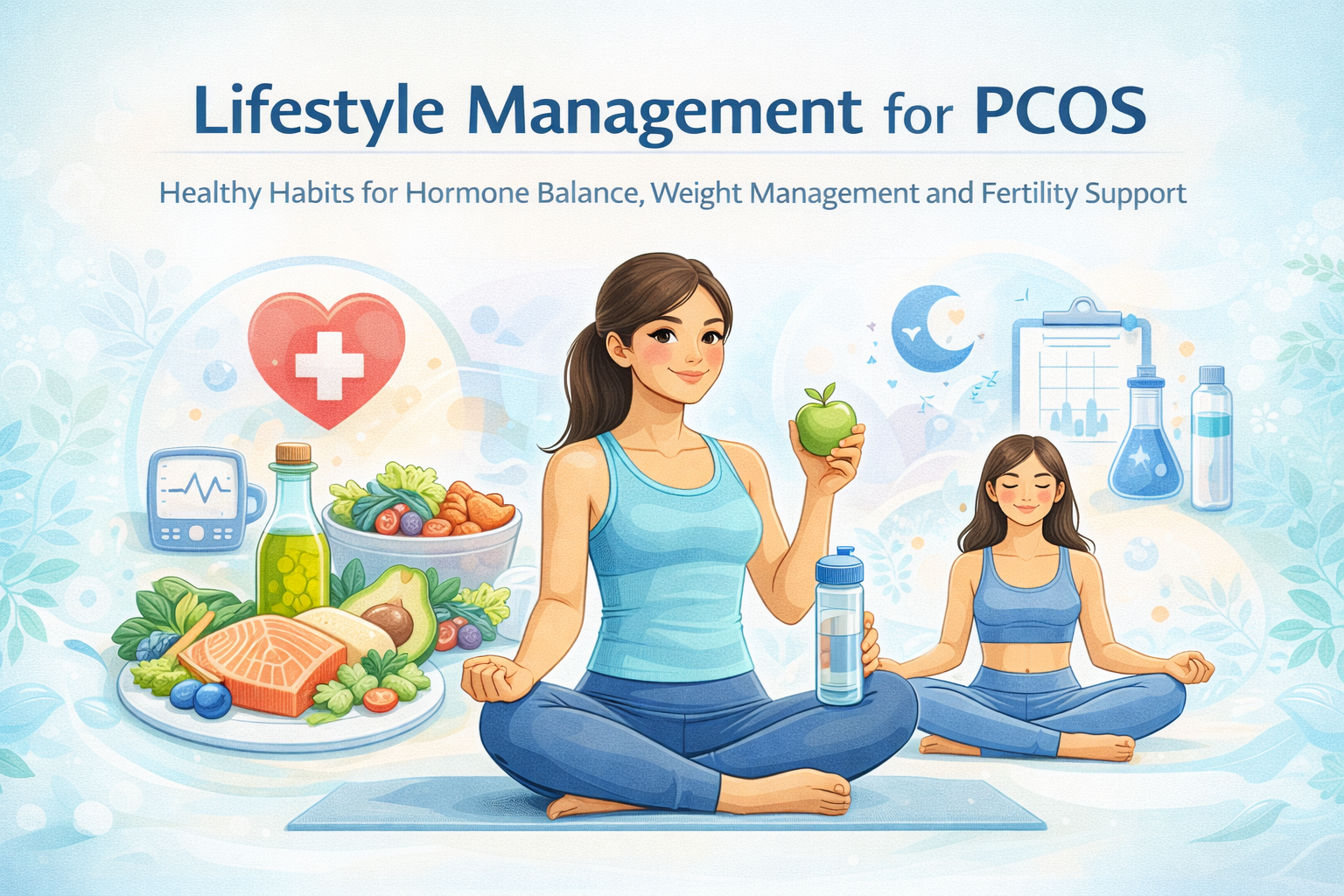
PCOS Lifestyle Management: Daily Habits That Support Hormone Balance
Published - Apr 08, 2026 | Last Updated: 08 Apr, 2026
Published by: PCOS FERTICURE CLINIC
- Discover how food choices, physical activity, sleep, stress control and weight management can improve periods, energy, insulin resistance and skin symptoms in PCOS.
- Learn practical lifestyle steps for women aged 15 to 40 who want a realistic and sustainable plan rather than confusing internet advice.
- Understand how lifestyle support works alongside medical care for irregular periods, fertility planning, acne, mood swings and long-term health protection.
Small daily changes, when done consistently, can make a meaningful difference in hormones, periods, weight, skin, mood and fertility.
1. Why Lifestyle Management Matters in PCOS
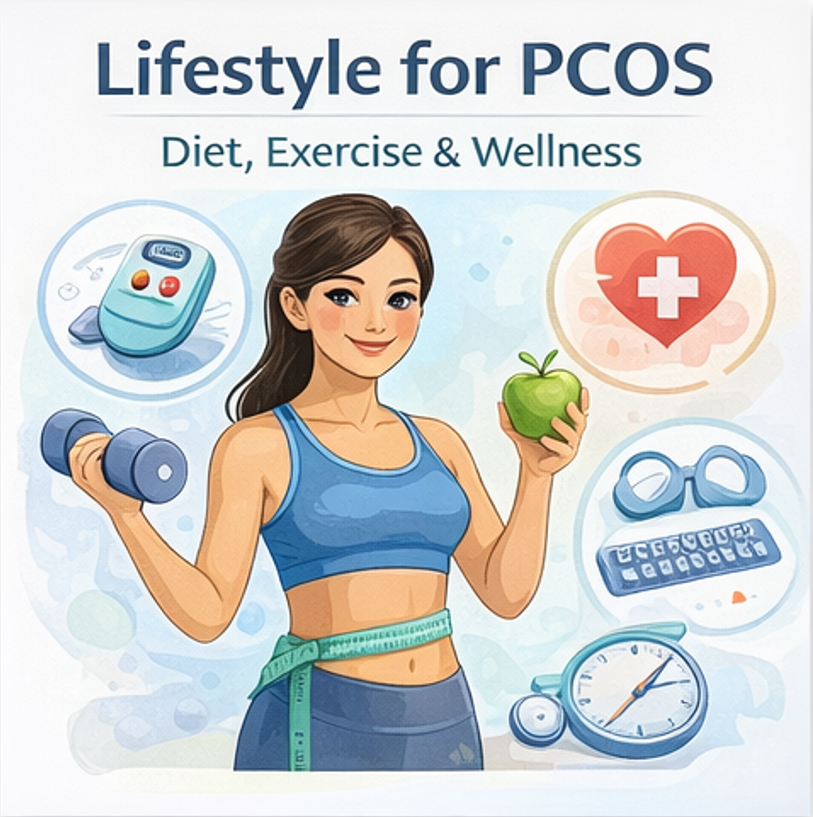
PCOS is more than a period problem
Many women first think of PCOS as a condition that only causes irregular periods. In reality, PCOS affects hormones, metabolism, skin, mood, ovulation, energy levels and future fertility. This is why lifestyle management is so important. Food choices, sleep quality, stress level and movement patterns can influence insulin resistance, inflammation and hormonal balance in a very real way.
Lifestyle care does not mean blaming the patient or saying that the condition is “just because of weight.” PCOS can affect women of different body types. However, it is also true that daily habits can either improve symptoms or make them harder to control. The goal is not perfection. The goal is steady improvement.
How daily habits influence hormones
- Balanced meals can reduce sharp blood sugar spikes and support insulin regulation.
- Regular exercise can improve insulin sensitivity and support ovulation.
- Adequate sleep supports appetite hormones, stress control and recovery.
- Stress reduction may help emotional stability and prevent worsening of hormonal imbalance.
- Healthy routines often improve energy, skin and confidence even before major weight changes are seen.
Lifestyle management is often the foundation on which medical care works better. Whether your concern is PCOS weight loss, irregular periods, PCOS fertility, PCOS acne or PCOS mood swings, a daily routine matters.
2. Lifestyle Goals for Women With PCOS
What improvement should look like
Lifestyle success in PCOS should not be measured only by a number on the weighing scale. Some women become discouraged because they do not see rapid weight loss, even though their body is already responding positively. Real progress may include:
- More regular periods.
- Improved energy and less fatigue.
- Reduced sugar cravings.
- Better sleep quality.
- Improvement in acne or less oily skin.
- More stable mood.
- Better exercise tolerance.
- Gradual change in measurements even if scale weight changes slowly.
Why quick fixes often fail
Very strict diets, extreme fasting, exhausting workouts and guilt-based plans usually do not work for long. They can raise stress, increase binge eating, disturb sleep and make exercise feel like punishment. For women with PCOS, a realistic plan is usually more effective than a dramatic one.
Lifestyle management should be sustainable for months and years, not only for a few weeks. Your body does not need punishment. It needs support, consistency and intelligent structure.
3. PCOS Diet Basics
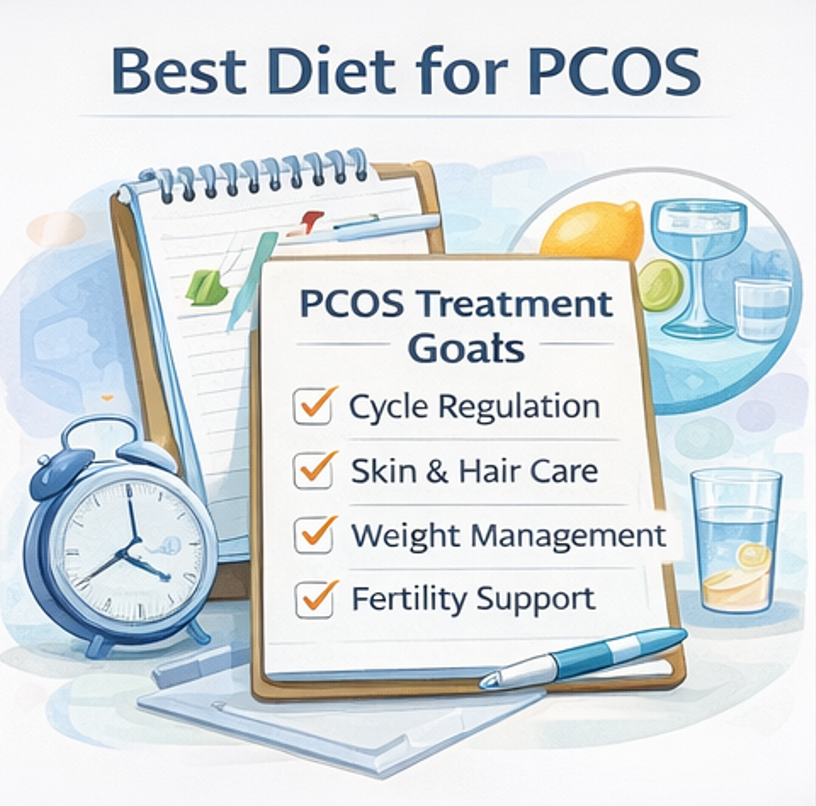
Building a balanced plate
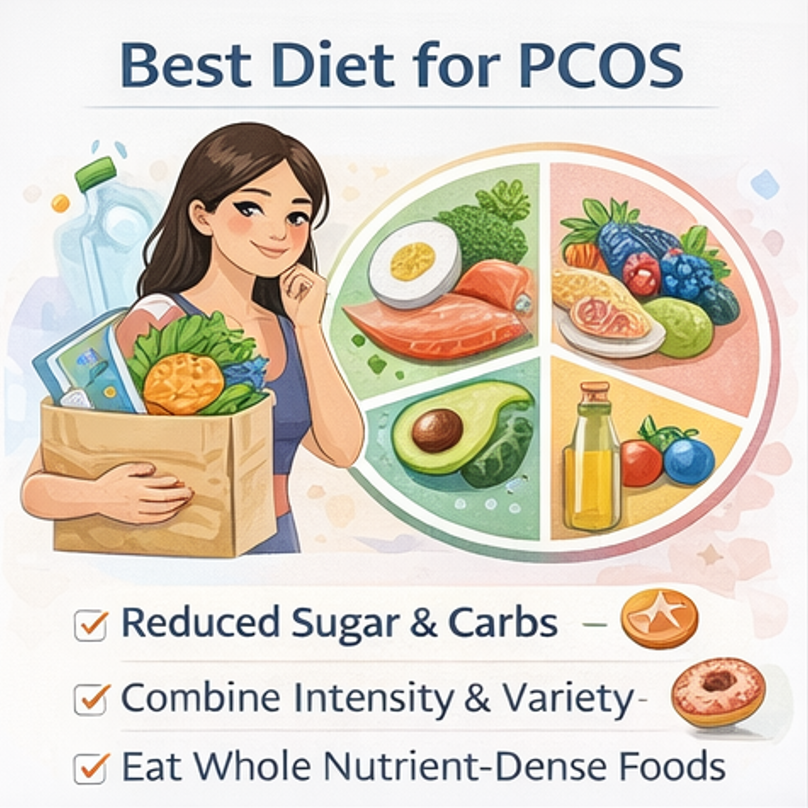
A good PCOS diet is not about starvation. It is about smarter meal composition. Most women do well when meals contain a balance of protein, fiber, healthy fats and controlled portions of carbohydrates. This pattern helps avoid sudden hunger spikes and keeps energy more stable.
- Include protein sources such as eggs, paneer, curd, dal, chana, fish or chicken depending on preference.
- Add fiber-rich vegetables in both lunch and dinner.
- Choose whole grains or controlled portions of traditional carbs rather than excess refined flour and sugar.
- Add healthy fats in moderate amounts such as nuts, seeds or home-style oils used sensibly.
- Do not skip meals regularly if it causes overeating later.
Foods that help and foods to reduce
The best PCOS meal plan is one you can realistically follow in your cultural and family setting. It does not need to look fashionable on social media to be effective. Focus on patterns instead of rigid food rules.
- Helpful foods: vegetables, salads, dals, pulses, curd, nuts, seeds, fruits in sensible portions, home-cooked meals, whole grains, lean proteins.
- Reduce when possible: sugary drinks, excess bakery items, frequent fried snacks, large refined-carb meals without protein, frequent desserts, highly processed foods.
- Smart habit: pair carbs with protein and fiber to improve satiety.
- Smart habit: avoid drinking calories throughout the day.
Some women do better with meal timing structure, some with portion correction, and some with protein improvement. Personalization matters more than blindly copying someone else’s plan.
4. Weight Management and Insulin Resistance
Why weight can be stubborn in PCOS
Many women with PCOS say, “I am eating less but not losing weight.” This frustration is real. Insulin resistance, sleep issues, cravings, emotional eating, hormonal imbalance and reduced activity due to fatigue can all make weight management more difficult. That does not mean it is impossible. It means the approach has to be smarter and more patient.
Insulin resistance can make the body hold on to weight more easily and increase hunger after high-sugar or high-refined-carb meals. This is one reason why women with PCOS often benefit from consistent meal quality, not just calorie counting.
Healthy strategies for sustainable change
- Set small goals such as improved breakfast quality or daily walking before expecting dramatic transformation.
- Track consistency, not only scale changes.
- Focus on waist reduction, energy and cycle improvement too.
- Avoid all-or-nothing thinking after one off-plan meal.
- Plan ahead for hunger, travel, office food and social events.
- Use medical support when needed instead of struggling alone for months.
Even moderate and gradual progress in PCOS weight loss can improve ovulation, reduce insulin resistance and support better hormonal balance.
5. Exercise Guidance for PCOS
Best types of exercise
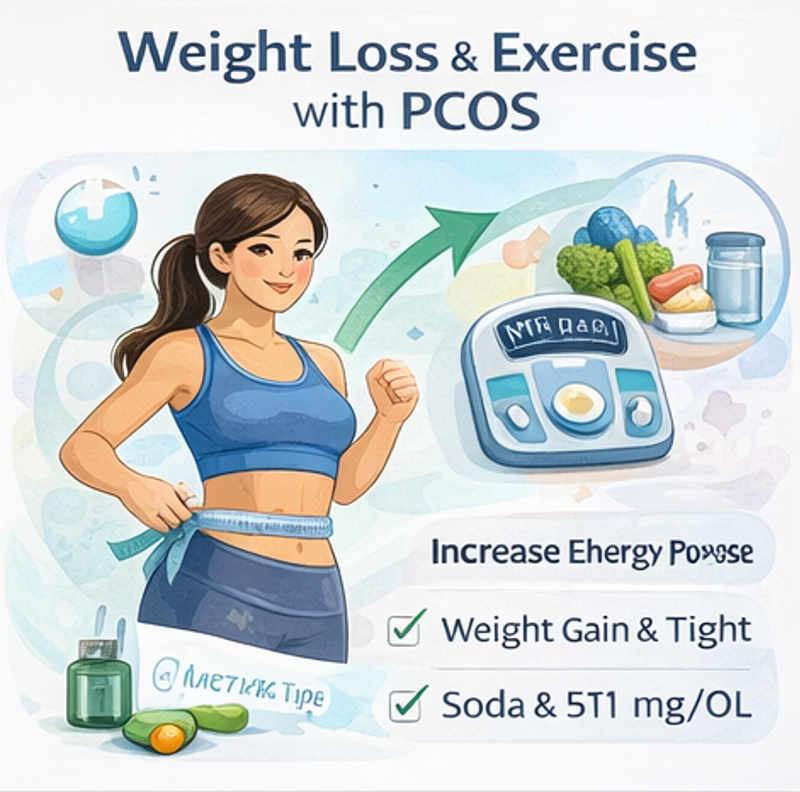
There is no one perfect workout for every woman with PCOS. The best exercise is the one that is safe, enjoyable and repeatable. A good plan often combines movement for heart health, strength work for metabolism and flexibility or recovery work for stress support.
- Brisk walking for consistency and cardiovascular health.
- Strength training to improve muscle mass and insulin sensitivity.
- Cycling, dancing or swimming for enjoyable calorie expenditure.
- Yoga or stretching for flexibility, stress reduction and body awareness.
- Short active breaks during the day if long workouts are difficult.
How much activity is useful
You do not need to become an athlete to support PCOS. Regular moderate activity done most days is often more useful than one intense workout followed by long inactivity. Start with what is realistic. For a beginner, even 20 to 30 minutes of brisk walking most days can be a strong starting point.
Women who are not used to exercise should build gradually. Severe fatigue, injury or menstrual discomfort should not be ignored. A practical routine is far better than a dramatic routine that ends in burnout.
6. Sleep, Stress and Daily Rhythm
Why sleep affects hormones
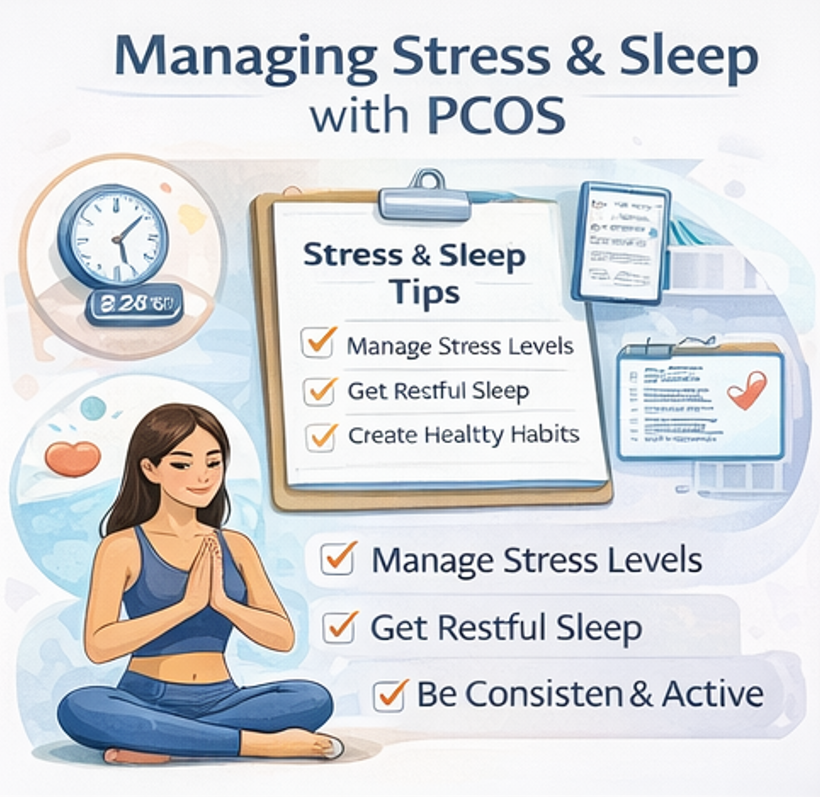
Poor sleep can worsen hunger, cravings, irritability, fatigue and stress response. When sleep is repeatedly disturbed, women may find it harder to manage food choices, exercise regularly and control emotional eating. Sleep is not a luxury in PCOS care. It is a metabolic tool.
- Aim for a regular sleep-wake schedule.
- Reduce late-night screen exposure when possible.
- Avoid heavy meals just before sleeping if that affects digestion.
- Limit caffeine late in the day if sleep is poor.
- Seek medical advice if there is snoring, severe fatigue or suspected sleep disorders.
Stress reduction that actually helps
Stress does not directly “cause” all PCOS, but it can definitely worsen symptoms and make routines harder to follow. A woman dealing with hormonal acne, irregular periods, body image concerns and fertility stress may feel overwhelmed. This emotional load deserves attention.
- Deep breathing for a few minutes daily.
- Mindful walking or quiet time without digital overload.
- Journaling for emotional processing.
- Yoga or stretching for stress release.
- Setting realistic schedules instead of constant self-pressure.
- Getting support when anxiety or sadness becomes frequent.
7. Lifestyle Support for Periods, Acne and Hair Changes
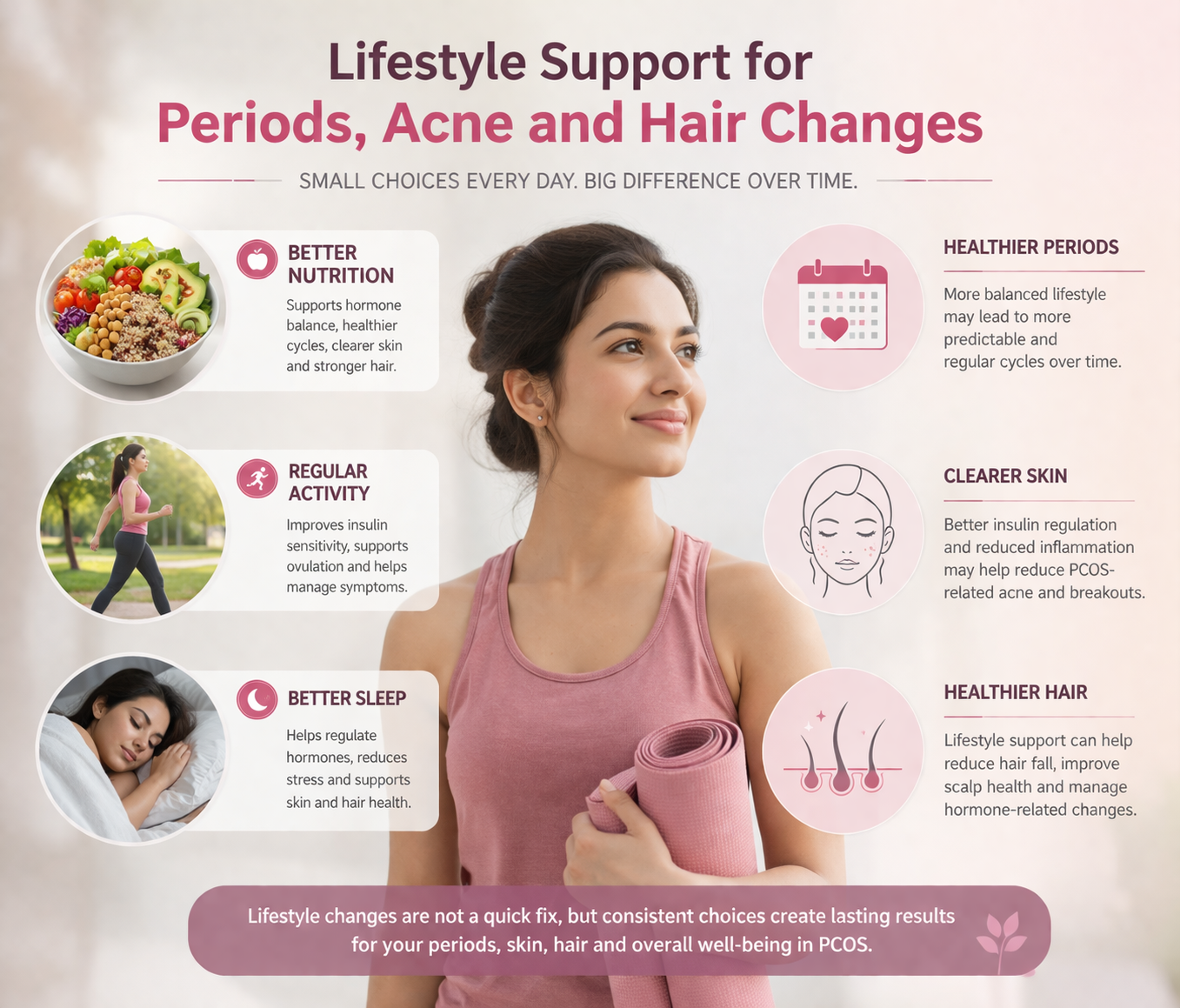
Effects on cycles and ovulation
When food quality improves, activity becomes regular and sleep is better, many women notice that cycles become more predictable over time. This does not happen overnight, but it often improves the body’s hormonal rhythm. For women who are not trying to conceive immediately, lifestyle support still matters because it can help the body function more smoothly and reduce progression of symptoms.
Effects on skin and hair
PCOS-related skin and hair symptoms can affect confidence deeply. While lifestyle changes are not a substitute for dermatologic or gynecologic treatment where needed, they can support improvement from inside out. Better insulin regulation and weight balance may help reduce the hormonal environment that fuels acne and androgen-related changes.
- Consistent routines may support improvement in PCOS acne.
- Balanced eating may reduce inflammatory food patterns in some women.
- Better sleep may help skin recovery and stress-related flare-ups.
- Medical treatment is still important for severe acne, scalp hair thinning or excess facial hair.
8. Lifestyle and Fertility in PCOS

Preparing the body for conception
For many women, the desire to conceive is what finally brings attention to PCOS. Lifestyle care can play a major role in fertility preparation. Better blood sugar control, improved weight pattern, regular movement and healthier sleep may support ovulation and improve the body’s readiness for pregnancy.
- Work toward more regular cycles if possible.
- Improve meal quality and reduce ultra-processed foods.
- Address low activity and excess sitting.
- Take guidance on supplements or medications only under medical advice.
- Seek early consultation if pregnancy is the goal and cycles are highly irregular.
When lifestyle alone may not be enough
Lifestyle support is powerful, but it is not a magic replacement for medical care in every case. Some women need ovulation support, hormone treatment or fertility workup. Seeking help early can save time and reduce emotional stress. If you are planning pregnancy, it is wise to combine healthy routines with expert guidance on PCOS fertility.
9. Psychological Impact and Emotional Well-Being
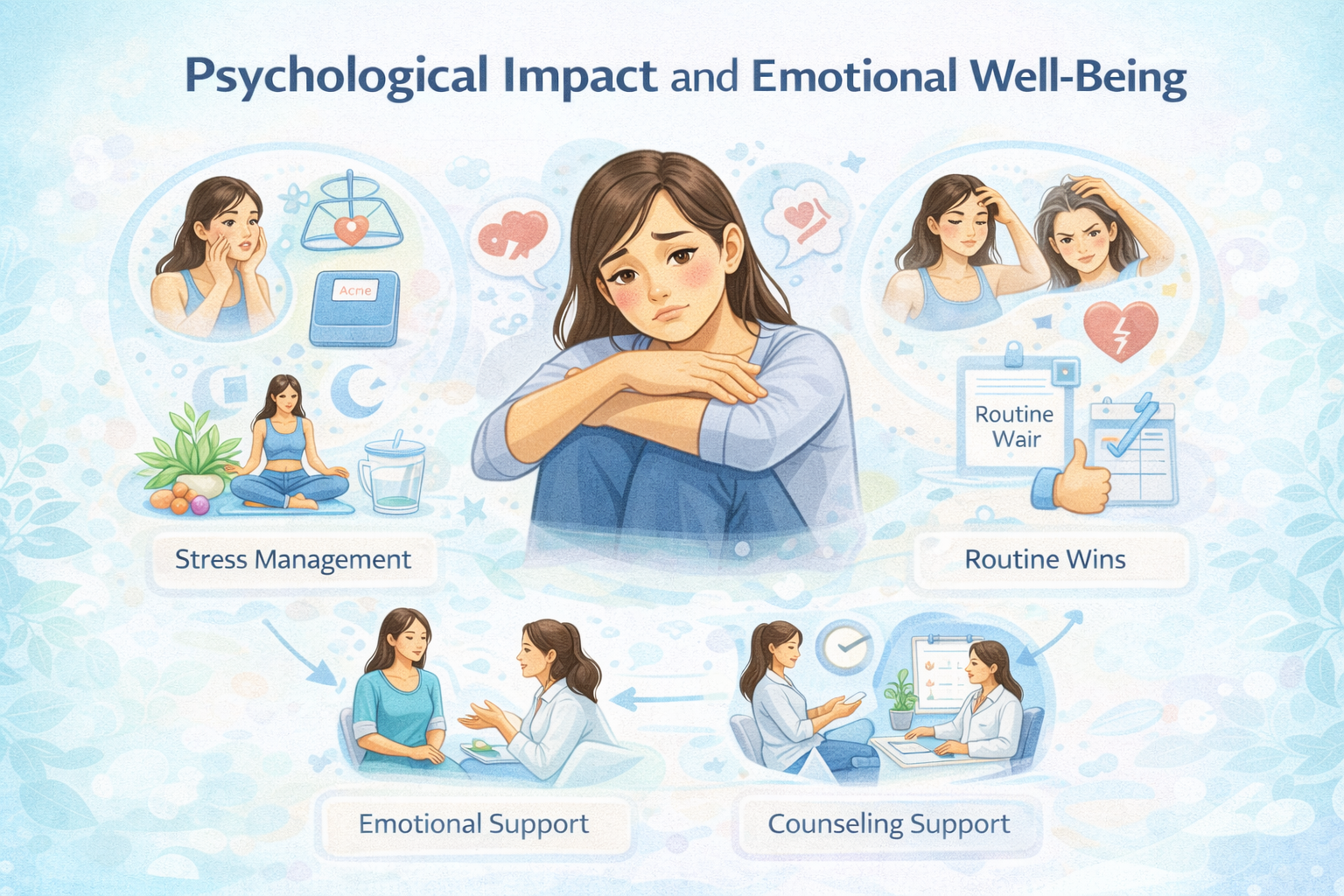
Mood swings, anxiety and body image
PCOS can affect how a woman feels physically and emotionally. Irregular periods, acne, facial hair, hair thinning, weight struggles and fertility worries can slowly lower confidence. Many women also experience irritability, anxiety or emotional heaviness. These concerns are real and should not be dismissed.
Lifestyle support can improve emotional well-being by creating routine, better energy and more predictable body function. Still, emotional symptoms may need direct attention too. If mood changes are frequent, read more about PCOS mood swings and do not hesitate to seek help.
Healthy coping habits
- Do not measure self-worth only through body size or skin condition.
- Stay away from extreme comparison with social media images.
- Celebrate routine wins such as sleeping earlier or walking regularly.
- Ask for emotional support when symptoms are affecting relationships or work.
- Consider counseling when stress, anxiety or sadness becomes persistent.
10. A Practical Daily PCOS Routine
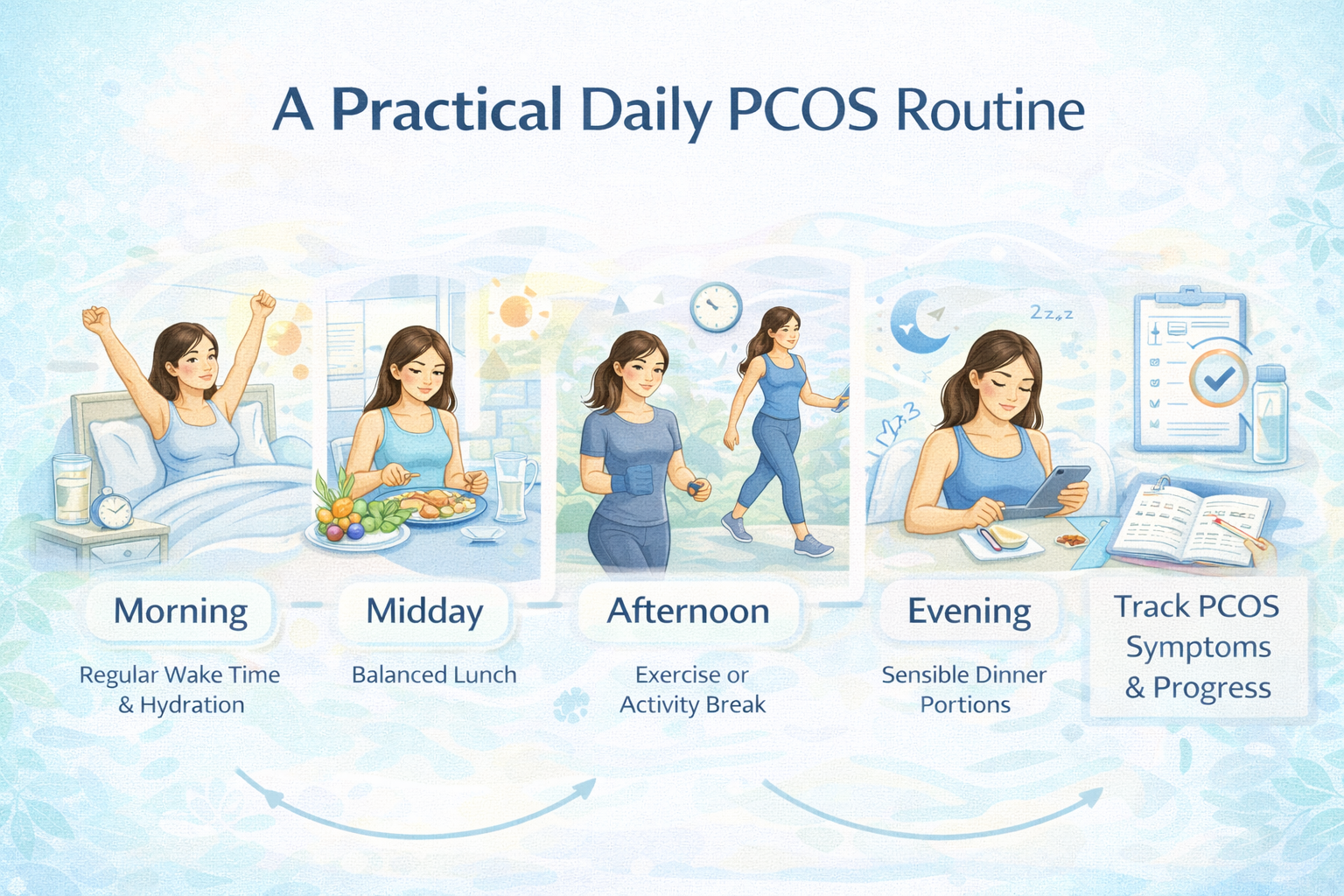
Morning to night lifestyle plan
Many women improve more when they stop chasing random tips and start following a simple repeatable routine. Your routine does not need to be perfect. It just needs to support your health more often than it harms it.
- Morning: wake at a regular time, hydrate, avoid skipping breakfast if it leads to overeating later.
- Midday: choose a balanced lunch with protein and vegetables, not only refined carbs.
- Afternoon: take a short walk or activity break instead of sitting continuously.
- Evening: include planned exercise or brisk walking on most days.
- Dinner: keep portions sensible and avoid repeated binge-style eating.
- Night: slow down screen use, improve sleep timing and prepare for the next day.
Tracking progress without obsession
Track enough to stay aware, but not so much that health becomes stress. Useful things to monitor include:
- Cycle dates and bleeding pattern.
- Energy and sleep quality.
- Exercise consistency per week.
- Meal routine and binge triggers.
- Skin changes and cravings.
- Waist or clothing fit over time.
Progress is often non-linear. That is normal. The right response is adjustment, not self-criticism.
11. When to Seek Medical Help Alongside Lifestyle Changes
Red flags and treatment support
Lifestyle care is important, but some symptoms need clinical evaluation and treatment support. Please seek medical advice if you have:
- Periods absent for long durations.
- Very heavy or prolonged bleeding.
- Rapid worsening of acne or excess hair growth.
- Fertility concerns or repeated difficulty conceiving.
- Strong signs of insulin resistance or uncontrolled weight gain.
- Significant mood changes affecting daily life.
How a clinic can personalize your plan
Every woman’s PCOS pattern is different. Some need stronger diet and insulin support. Some need help with fertility, some with acne, and some with emotional symptoms. At PCOS Ferticure Clinic, lifestyle advice can be tailored based on menstrual pattern, body type, metabolic risk, age and personal goals. That is far more useful than following generic internet content that may not suit your condition.
Lifestyle management works best when it is realistic, medically guided and adapted to your routine rather than copied from someone else’s body or schedule.
12. Conclusion
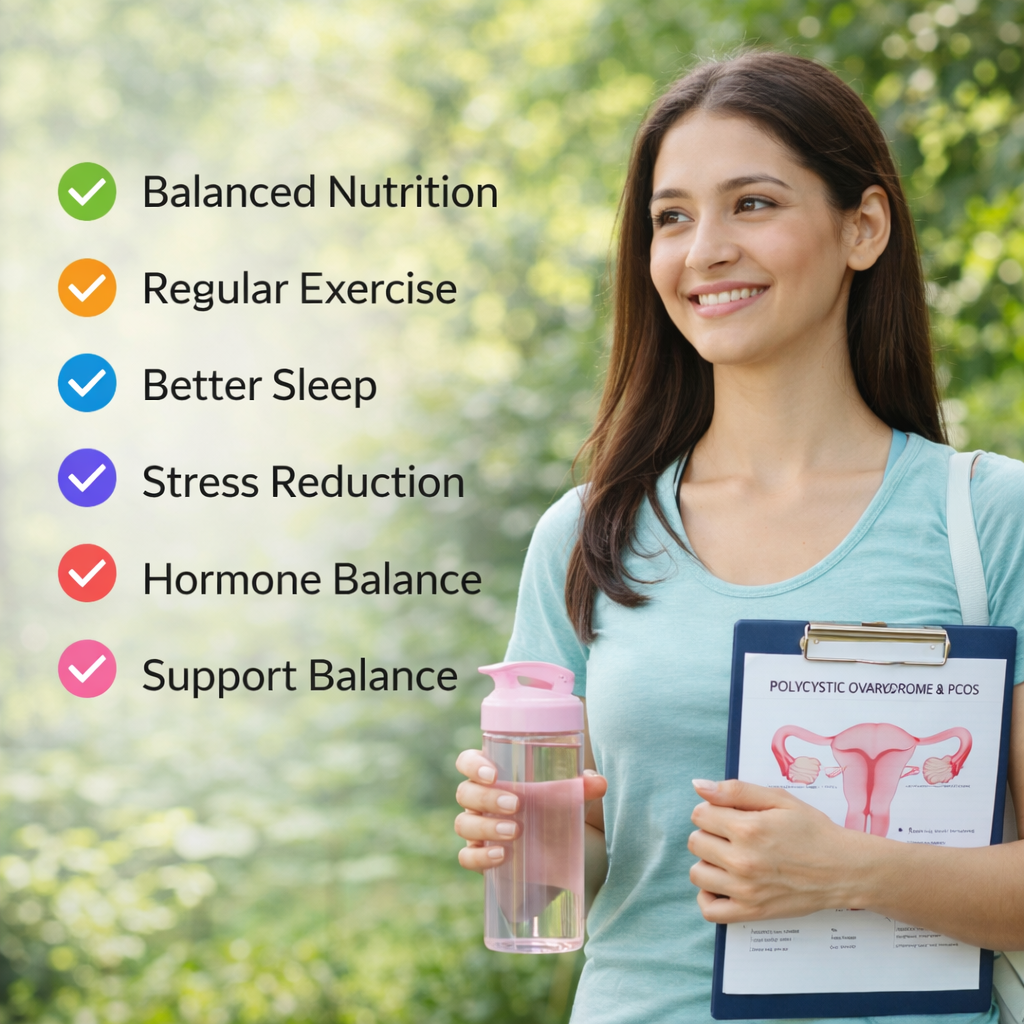
Building a sustainable future with PCOS
PCOS lifestyle management is not about becoming perfect overnight. It is about creating a pattern of choices that help your body function better. Smarter meals, regular movement, better sleep, lower stress and a structured routine can improve far more than just weight. They can support hormone balance, skin, cycles, energy, emotional well-being and fertility.
If you have been feeling overwhelmed by irregular periods, cravings, stubborn weight changes, acne, tiredness or fertility concerns, remember that lifestyle changes do not have to be extreme to be meaningful. Consistency is stronger than intensity. Guidance is stronger than confusion. Support is stronger than self-blame.
Dr. Shabnam Sharjil and PCOS Ferticure Clinic aim to help women understand PCOS in a practical and compassionate way so that lifestyle management becomes achievable, sustainable and medically responsible. The right daily routine can become one of the most powerful tools in your long-term PCOS care journey.
Book An Appointment
Other Important Articles on Site
PCOD Weight Loss
Guide to a PCOS Diet Chart
Learn more about Guide to a PCOS Diet Chart and how it relates to women's health and PCOS management.
Read moreUnderstanding PCOS Acne
Learn more about Understanding PCOS Acne and how it relates to women's health and PCOS management.
Read morePCOS Fertility Guide
Learn more about PCOS Fertility Guide and how it relates to women's health and PCOS management.
Read moreMood Swings and Anxiety in PCOS
Learn more about Mood Swings and Anxiety in PCOS and how it relates to women's health and PCOS management.
Read morePCOS Miscarriage Causes
Learn more about PCOS Miscarriage Causes and how it relates to women's health and PCOS management.
Read morePCOS and Endometriosis
Learn more about PCOS and Endometriosis and how it relates to women's health and PCOS management.
Read moreFlax Seeds Benefits on PCOS
Learn more about Flax Seeds Benefits on PCOS and how it relates to women's health and PCOS management.
Read moreRATINGS AND REVIEWS RECEIVED ON DIFFERENT PLATFORMS
PCOS Treatment in Delhi (PCOS VIdeo Consultation:)

4.8 out of 5 (189 reviews and ratings)
PCOS Specialist in Delhi (PCOS Video Consultation:)
Practo
99% (277 reviews and ratings)
Top PCOS Doctors in Delhi (PCOS Video Consultation:)
Lybrate

4.4 (642 reviews and ratings)
PCOS Treatment for Un-Married (Polycystic Ovary Doctor In Delhi)
Just Dial
4.9 (490 reviews and ratings)
Services Provided at PCOS Ferticure Clinic
- PCOS Treatment in Delhi
- PCOS Treatment
- PCOS Symptoms and Treatment
- PCOS Treatment for Unmarried
- PCOS treatment in unmarried
- PCOS specialist doctor
- PCOS specialist in delhi
- Top PCOS Dcotor in delhi
- Which doctor to consult for PCOS
- PCOS Diagnosis In Delhi
- Book online appointment