


Learn more about PRP Therapy Under Eyes and how it relates to women's health and PCOS management.
Read more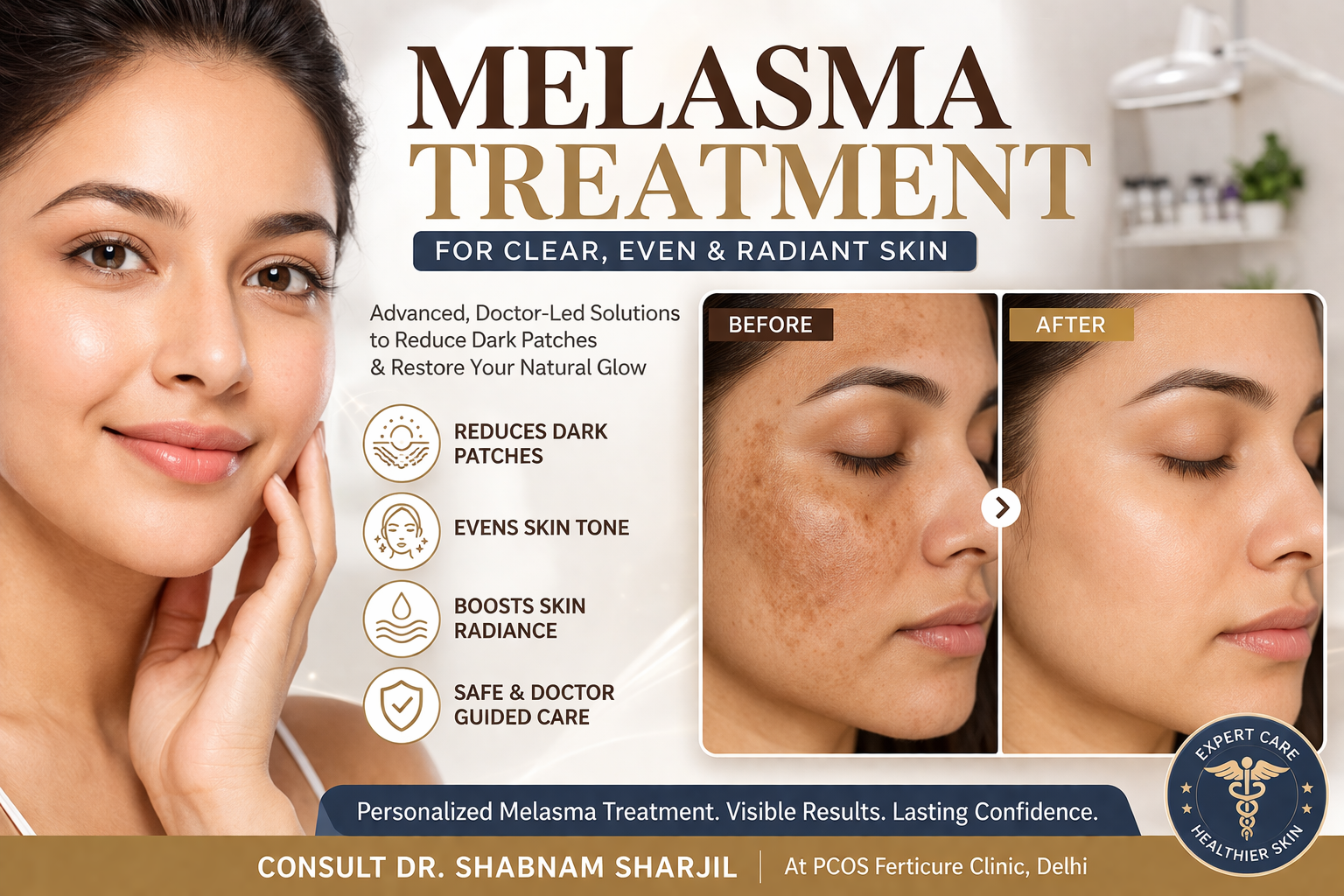
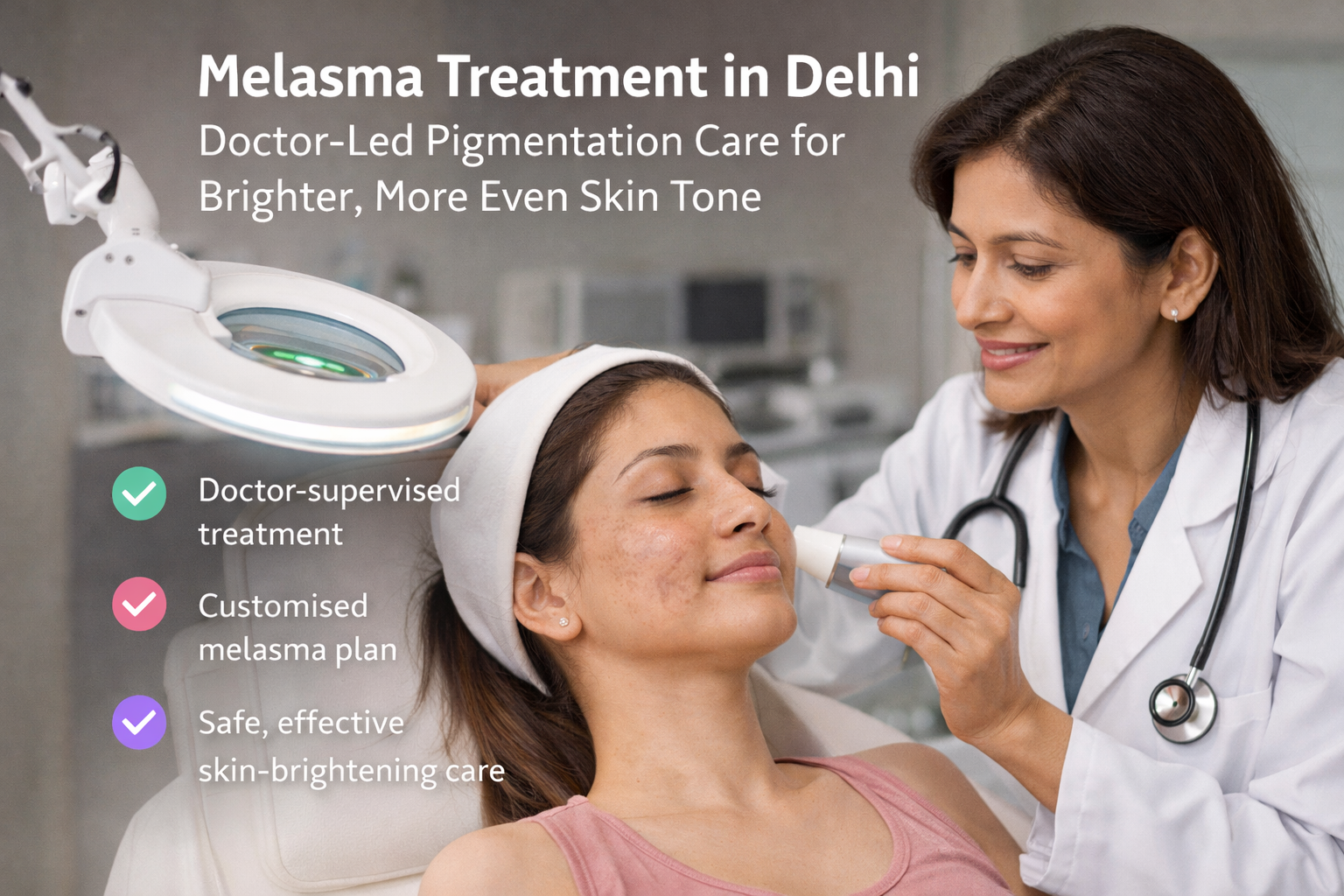
Melasma Treatment in Delhi
Doctor-Led Pigmentation Care for Brighter, More Even Skin Tone
Melasma is one of the most frustrating pigmentation concerns because it often returns, becomes darker with sun exposure and affects visible areas of the face such as the cheeks, forehead, upper lip and nose. At PCOS Ferticure Clinic, Delhi, Dr. Shabnam Sharjil offers medically responsible, patient-friendly and customized melasma treatment in Delhi for individuals struggling with facial pigmentation, uneven skin tone and recurrent discoloration.
Unlike quick-fix beauty claims seen online, melasma requires proper evaluation, realistic expectations and a treatment plan that focuses on both improvement and maintenance. It is not only about making the skin look brighter for a few days. It is about understanding why pigmentation developed, reducing triggers, selecting the right pigmentation treatment such as chemical peel treatment, PRP facial treatment or skin brightening treatment and protecting the skin barrier so that results can be safer and more sustainable.
If you have been searching for a dermatologist guided treatment, a trusted aesthetic skin clinic or medically supervised care for stubborn pigmentation, this page will help you understand melasma in detail. It explains what melasma is, who gets it, how it is treated, what results to expect, how long improvement takes, what recovery looks like and why a consultation with Dr. Shabnam Sharjil can help you choose the right path.
Melasma management often includes a combination of medical skincare, sun protection, lifestyle awareness and selected procedures such as chemical peels, PRP vampire facial therapy or other clinic-based options when suitable. Some people need a gentle correction plan. Others need a longer maintenance approach. The best results usually come from consistency, not aggression.
This page is designed for people actively searching online for solutions to facial pigmentation, dark patches, brown discoloration, post-pregnancy pigmentation, hormonal pigmentation and skin brightening under medical supervision.
Publishing Details
- Clinic: PCOS Ferticure Clinic, Delhi
- Doctor: Dr. Shabnam Sharjil
- Topic: Melasma treatment, pigmentation correction and skin rejuvenation
- Page Type: Long-form educational aesthetics treatment page
- Suitable For: Men and women concerned about facial pigmentation, uneven skin tone and recurrent dark patches
Highlights Section
- Doctor-led assessment of melasma type, severity and triggers
- Personalized plan for pigmentation treatment and skin rejuvenation
- Guidance on skincare, sunscreen and lifestyle precautions
- Procedure selection based on skin sensitivity and pigmentation depth
- Safe, realistic and medically responsible expectations
- Focus on both improvement and long-term maintenance
Subheading
Melasma treatment is not a one-size-fits-all facial glow procedure. It is a structured medical aesthetics approach to managing stubborn pigmentation using the right balance of skin protection, topical care, clinic-based procedures and long-term maintenance.
Table of Contents
- What Is Melasma
- Who Gets Melasma
- Skin Concerns Solved by Melasma Treatment
- Who Is an Ideal Candidate
- How Melasma Treatment Works
- Step by Step Treatment Procedure
- Benefits of Melasma Treatment
- Results Timeline and Before After Expectations
- Recovery, Downtime and Aftercare
- Side Effects, Risks and Safety
- Treatment Cost Factors and Why Choose Dr. Shabnam Sharjil
- Frequently Asked Questions and Conclusion
1. What Is Melasma
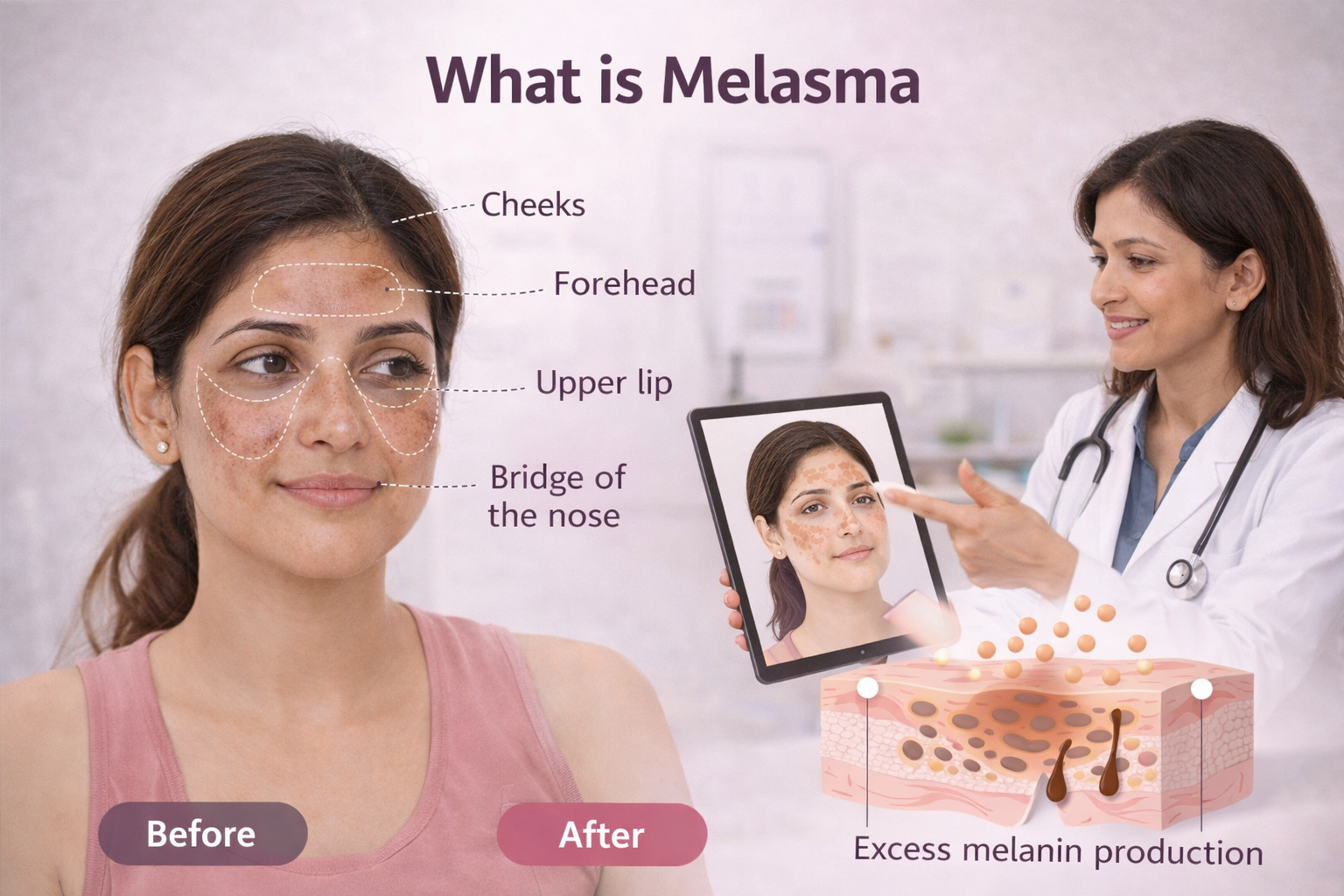
Understanding melasma in simple language
Melasma is a common pigmentation condition in which brown, grey-brown or patchy discoloration appears on the face. It often affects the cheeks, forehead, bridge of the nose, chin and upper lip. In many people, the patches are symmetrical, meaning the same areas are affected on both sides of the face.
The condition happens because pigment-producing cells in the skin become overactive. This leads to excess melanin production, which then appears as visible dark patches. Melasma is not dangerous, but it can affect confidence, self-image and comfort in social settings, especially when it becomes more noticeable in sunlight or after hormonal changes.
Why melasma is difficult to treat casually
Many people try random creams, home remedies or abrasive exfoliation when they notice facial pigmentation. With melasma, that approach can backfire. Over-irritating the skin may worsen pigmentation, especially in Indian skin tones and in people with a sensitive barrier.
- Melasma is often chronic and recurrent
- Sunlight can trigger or darken it quickly
- Hormones can influence its intensity
- Harsh treatment may aggravate it
- Maintenance is often as important as treatment
This is why medically guided melasma treatment in Delhi should focus on evaluation, customized planning and gradual improvement rather than aggressive promises.
2. Who Gets Melasma
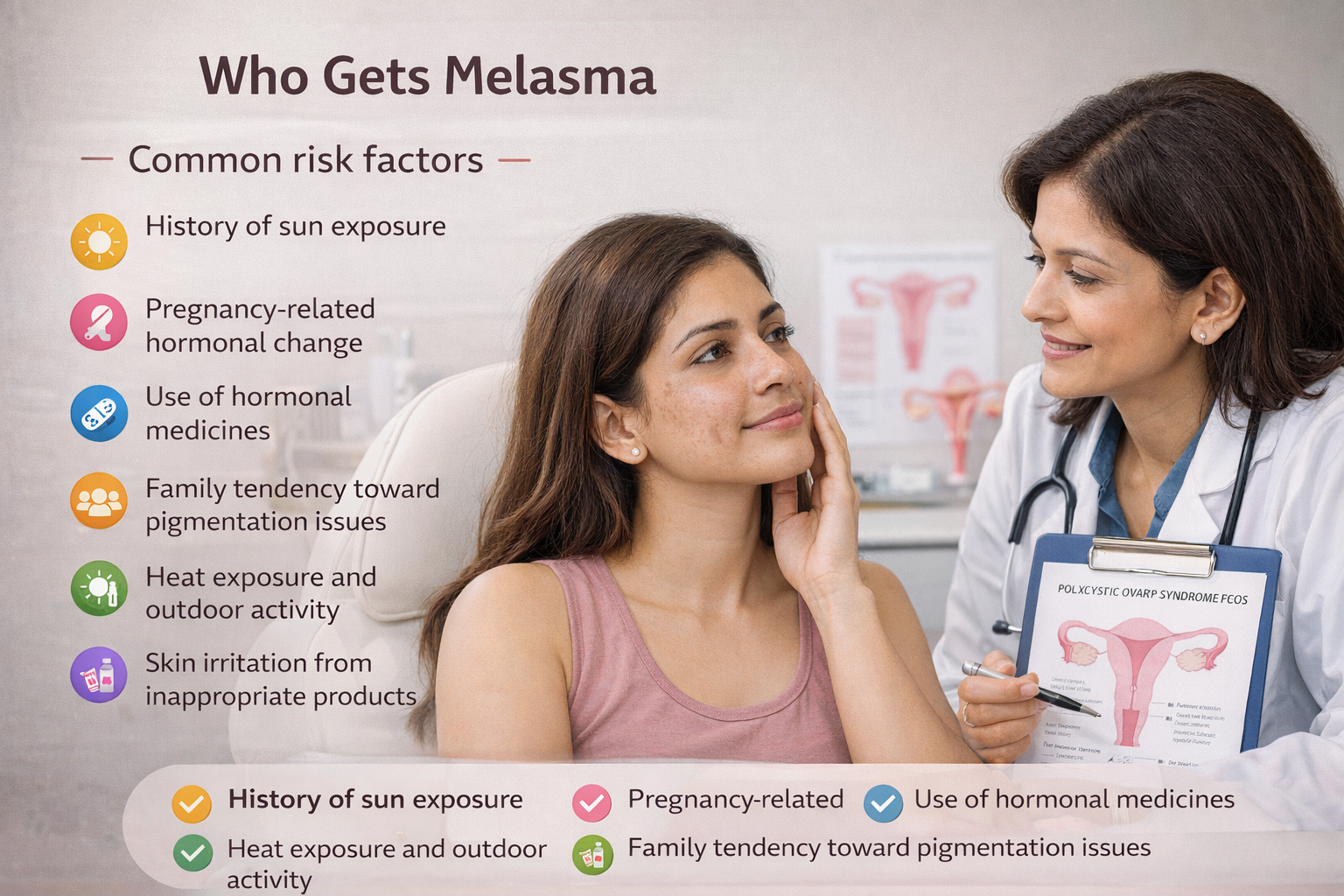
Common risk factors
Melasma is more commonly seen in women, especially during reproductive years, but men can also develop it. It is particularly common in individuals with medium to darker skin tones and in those who spend significant time in sunlight.
- History of sun exposure
- Pregnancy-related hormonal change
- Use of hormonal medicines in some cases
- Family tendency toward pigmentation issues
- Heat exposure and outdoor activity
- Skin irritation from inappropriate products
Hormonal and sun-related triggers
Melasma is often called hormonal pigmentation because it may flare with pregnancy, hormonal shifts or certain medications. However, even when hormones start the process, sun exposure is often what keeps it active. This is why sunscreen is not an optional extra in melasma care. It is one of the central parts of the treatment plan.
At PCOS Ferticure Clinic, the goal is to identify both the visible pigmentation and the hidden reasons it may be persisting. This helps create a more thoughtful strategy for pigmentation treatment and skin rejuvenation.
3. Skin Concerns Solved by Melasma Treatment
Pigmentation patterns treated in clinic
Melasma treatment is designed for more than one type of visible concern. Some patients come because of patchy cheeks. Others worry about upper lip darkness that looks like shadowing. Some experience broader dullness combined with brown spots.
- Brown patches on cheeks
- Forehead pigmentation
- Upper lip darkening
- Patchy uneven facial tone
- Post-pregnancy pigmentation concerns
- Sun-induced worsening of existing melasma
Uneven tone, dullness and texture concerns
Although melasma is primarily a pigmentation condition, patients often also feel that their skin looks tired, dull or older than before. A carefully chosen plan can therefore aim to improve these concerns, and in some cases may also be supported by skin brightening treatment for better overall glow and tone balance:
- Visible pigmentation intensity
- Overall facial brightness
- Uneven skin tone
- Texture affected by repeated product misuse
- Skin glow through barrier-friendly skin rejuvenation
In some people, melasma care overlaps with broader aesthetic goals such as anti aging treatment, hydration improvement and more polished skin appearance.
4. Who Is an Ideal Candidate
Suitable candidates
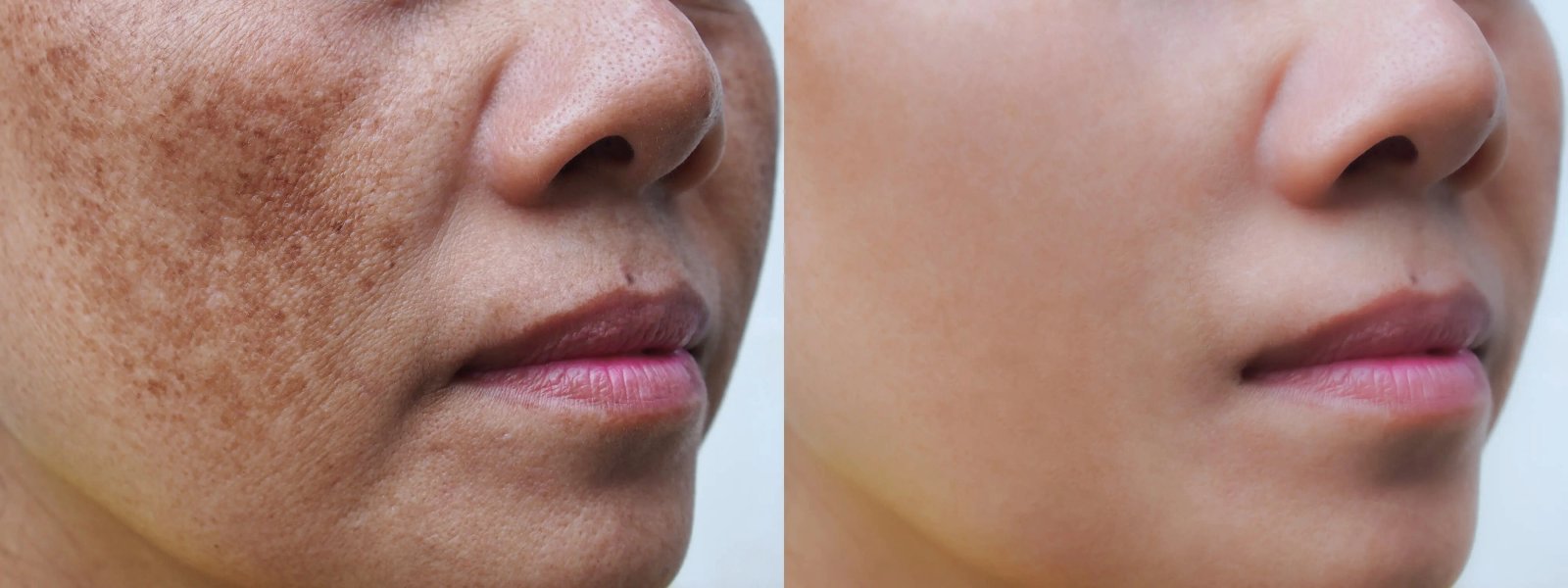
A good candidate for melasma treatment is someone who has visible facial pigmentation, understands that results take time and is willing to follow skincare and sun-protection advice consistently. The best outcomes often happen when the patient treats melasma as a journey rather than a single session fix. Patients who also experience acne scars, dullness or uneven skin texture may sometimes benefit from PRP facial treatment or chemical peel treatment as part of a broader skin improvement plan.
- People with stable but persistent facial pigmentation
- Individuals bothered by patchy or uneven facial tone
- Patients looking for medically guided care rather than random products
- Those ready to use sunscreen and aftercare properly
- People seeking a safer alternative to harsh self-treatment
When treatment may need caution
Not every person with pigmentation should immediately undergo procedures. Some may first need skin barrier repair, acne control or evaluation of irritation caused by previous products.
- Very sensitive or inflamed skin
- Recent use of strong peeling products without supervision
- Active infection or open skin injury
- Pregnancy-related decisions that need careful doctor advice
- Unrealistic expectations of instant complete clearance
A consultation with Dr. Shabnam Sharjil helps determine whether topical care alone, clinic-based treatment or a combination approach is more appropriate.
5. How Melasma Treatment Works
Topical and procedural approach
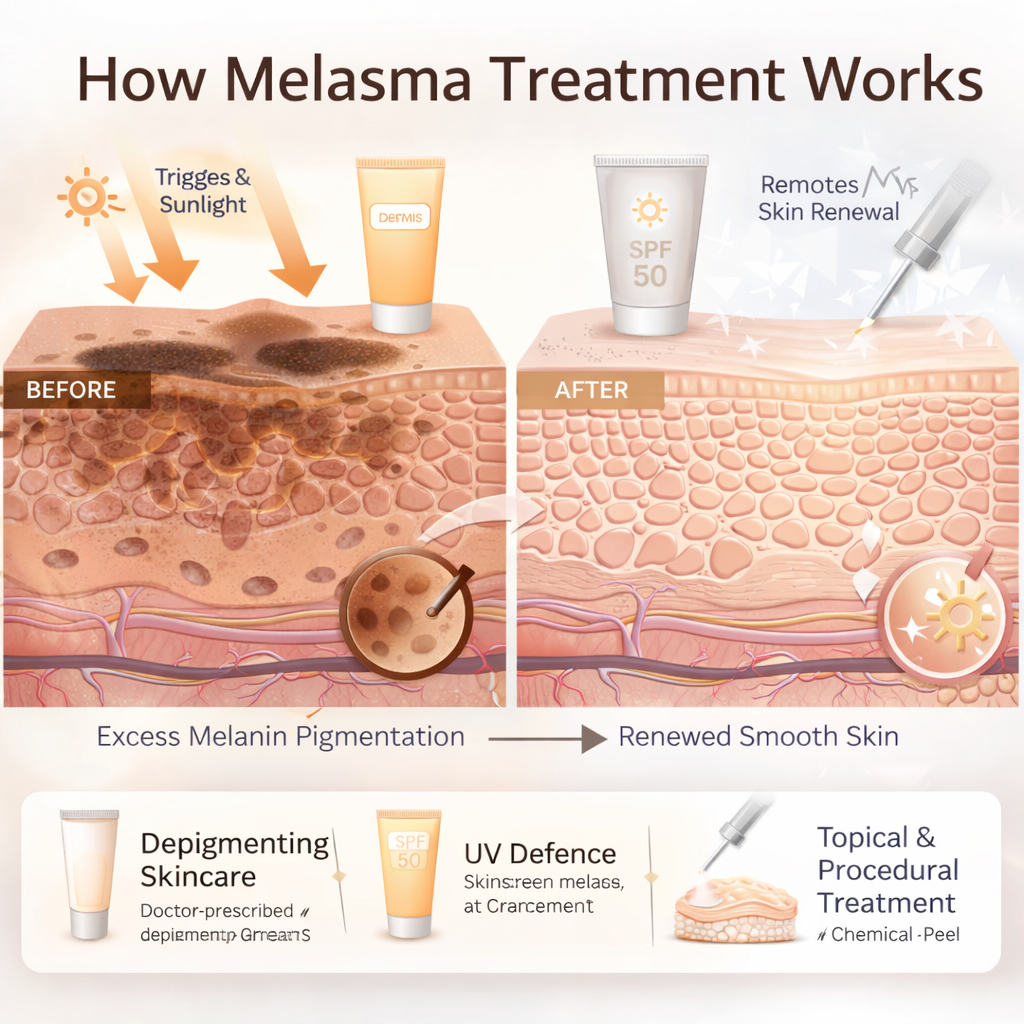
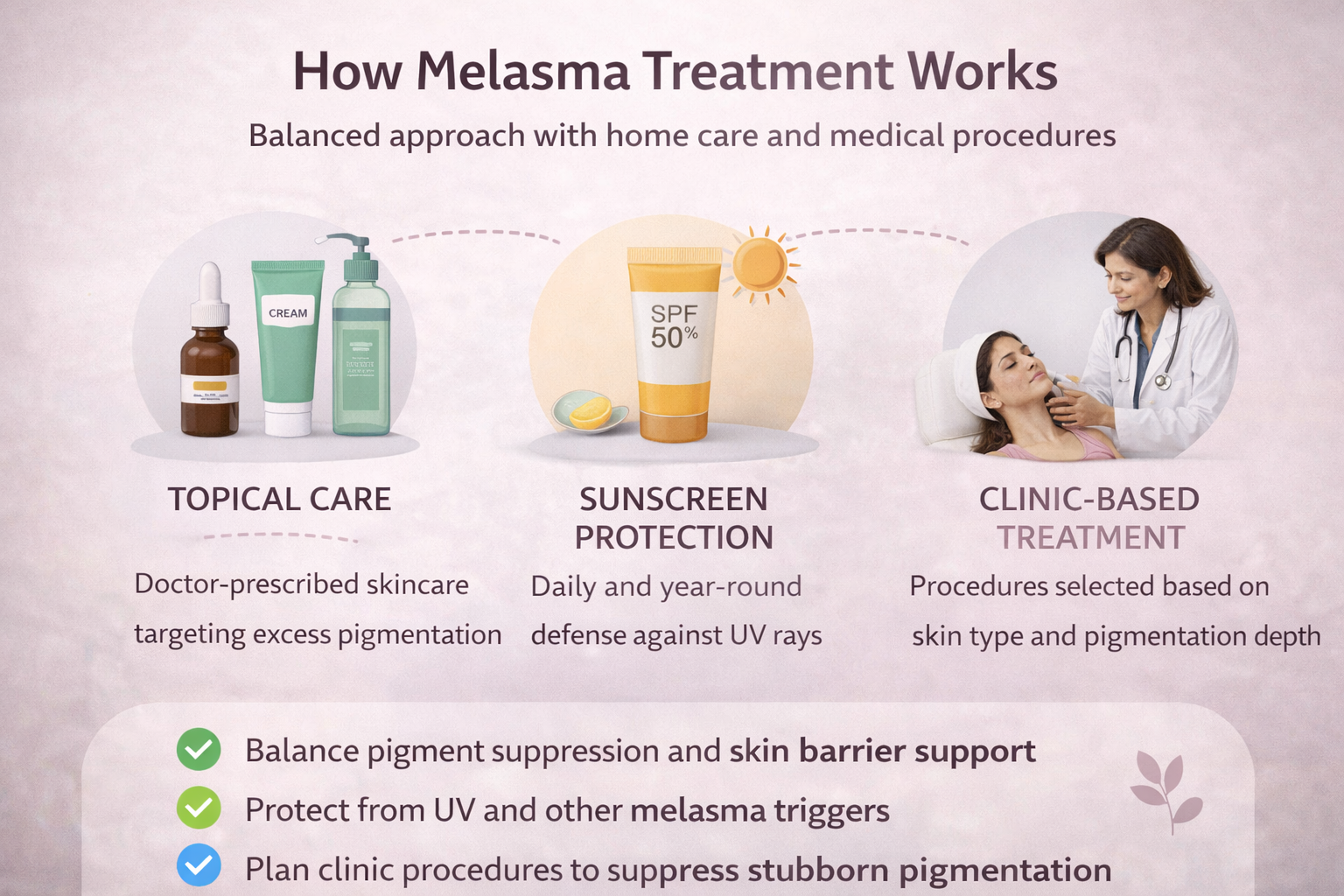
Melasma treatment works by reducing excess pigment production, encouraging controlled renewal of the skin and limiting the triggers that make pigmentation return. This may involve a combination of home care and clinic treatment. In selected patients, doctor-guided procedures such as chemical peel treatment or PRP vampire facial therapy may also be considered.
- Doctor-prescribed or selected depigmenting skincare
- High-quality sunscreen use every day
- Barrier-supportive skin routine
- Procedure-based options such as selected chemical peels when suitable
- Maintenance planning to help reduce relapse
Why skin barrier protection matters
In melasma care, stronger is not always better. Excess irritation can create inflammation, and inflammation itself may worsen pigmentation. For that reason, a safe plan balances correction with protection. This is particularly important in Indian skin and in patients who have already used multiple brightening products without success.
In an aesthetic skin clinic, treatment is ideally chosen after examining skin type, sensitivity, lifestyle, exposure to heat and sun, previous treatment history and severity of pigmentation.
6. Step by Step Treatment Procedure
Consultation and skin evaluation
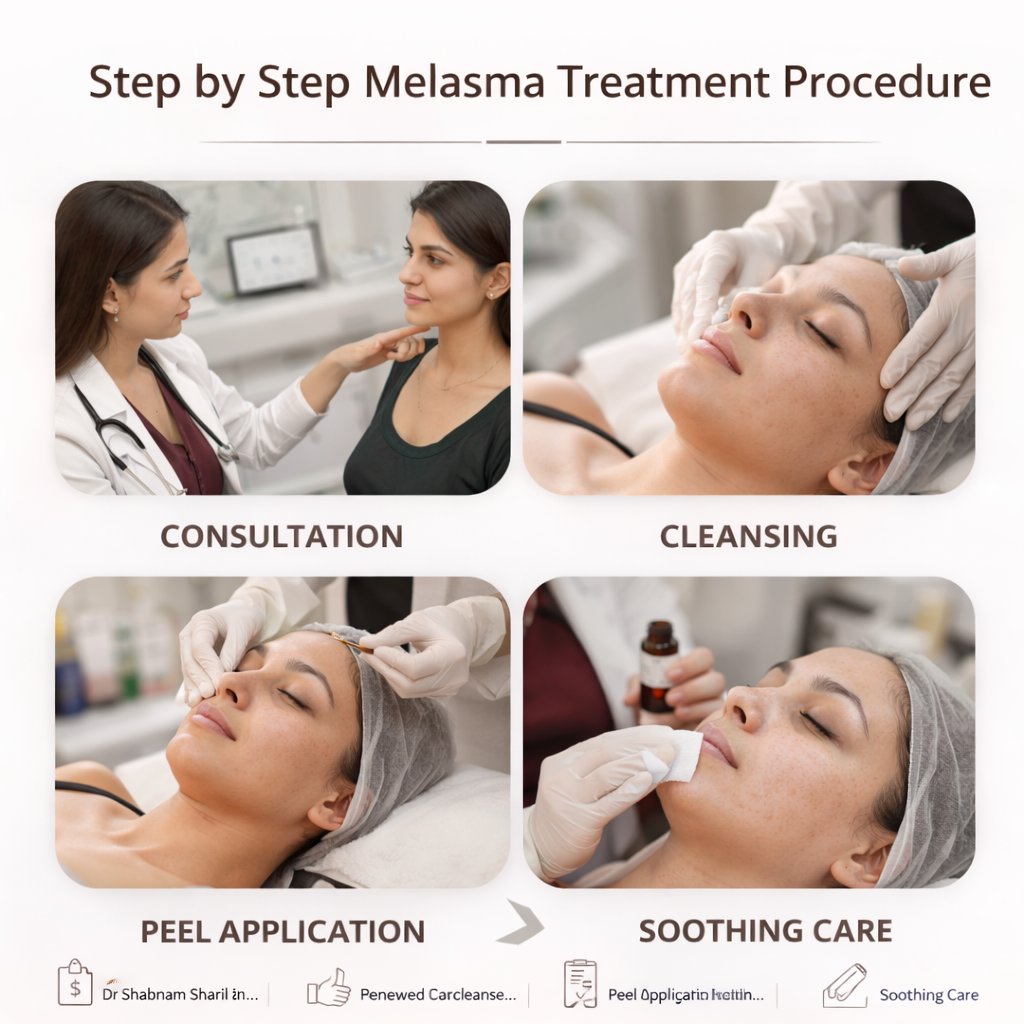
Every melasma treatment journey should begin with assessment, not assumption. During your consultation, Dr. Shabnam Sharjil evaluates the pattern of pigmentation, possible hormonal or sun-related triggers, previous skincare use and current skin sensitivity.
- Discussion of when pigmentation began
- Review of sun exposure habits
- Review of previous treatments or home remedies
- Assessment of skin type and irritation level
- Decision on whether procedural treatment is appropriate
What a clinic-based session may involve
If a procedure such as a doctor-selected peel is advised, the process is usually structured and controlled rather than rushed. Depending on pigmentation depth, skin sensitivity and treatment goals, this may include chemical peeling, PRP facial treatment or other doctor-guided pigmentation correction procedures. Although treatment specifics vary from one person to another, a session commonly includes:
- Skin cleansing and preparation
- Protection of sensitive areas when required
- Application of selected treatment agent
- Monitoring skin response during the session
- Neutralization or completion as appropriate
- Post-procedure soothing care and instructions
Typical procedure goals
The goal of the session is not to strip the skin. It is to support controlled correction of pigmentation while protecting the skin from unnecessary trauma.
- Reduce visible dull pigmentation gradually
- Improve overall skin clarity
- Support skin rejuvenation
- Improve the response to home-care products
- Build results over multiple sessions if needed
7. Benefits of Melasma Treatment
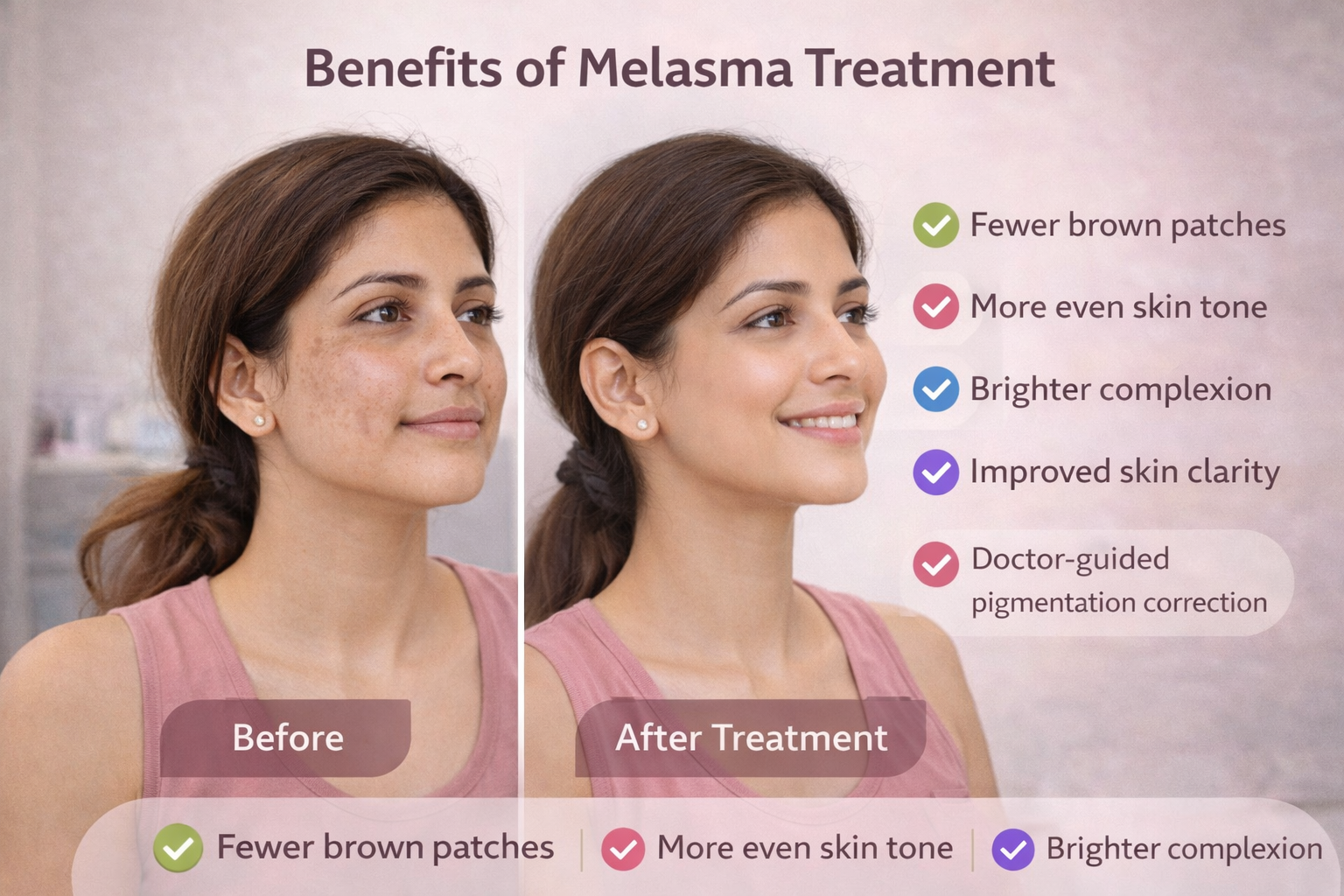
Visible aesthetic benefits
One of the biggest reasons people seek melasma treatment in Delhi is the desire to regain confidence in their skin. Proper treatment can help the face look clearer, fresher and more even.
- Reduction in visible brown patches
- More even facial tone
- Brighter and healthier appearance
- Improvement in patchy dullness
- Better confidence without heavy makeup dependency
Long-term skin management benefits
Beyond appearance, medically supervised care teaches the patient how to maintain improvement. This often has lasting value because melasma tends to behave like a condition that needs management, not one-time correction.
- Better understanding of triggers
- Safer skincare choices
- Less risk of overusing harsh brightening products
- Improved consistency with sunscreen
- Stronger long-term maintenance plan
In selected patients, melasma treatment may also complement broader goals such as glow enhancement, gentle anti aging treatment support and a more refined complexion.
8. Results Timeline and Before After Expectations
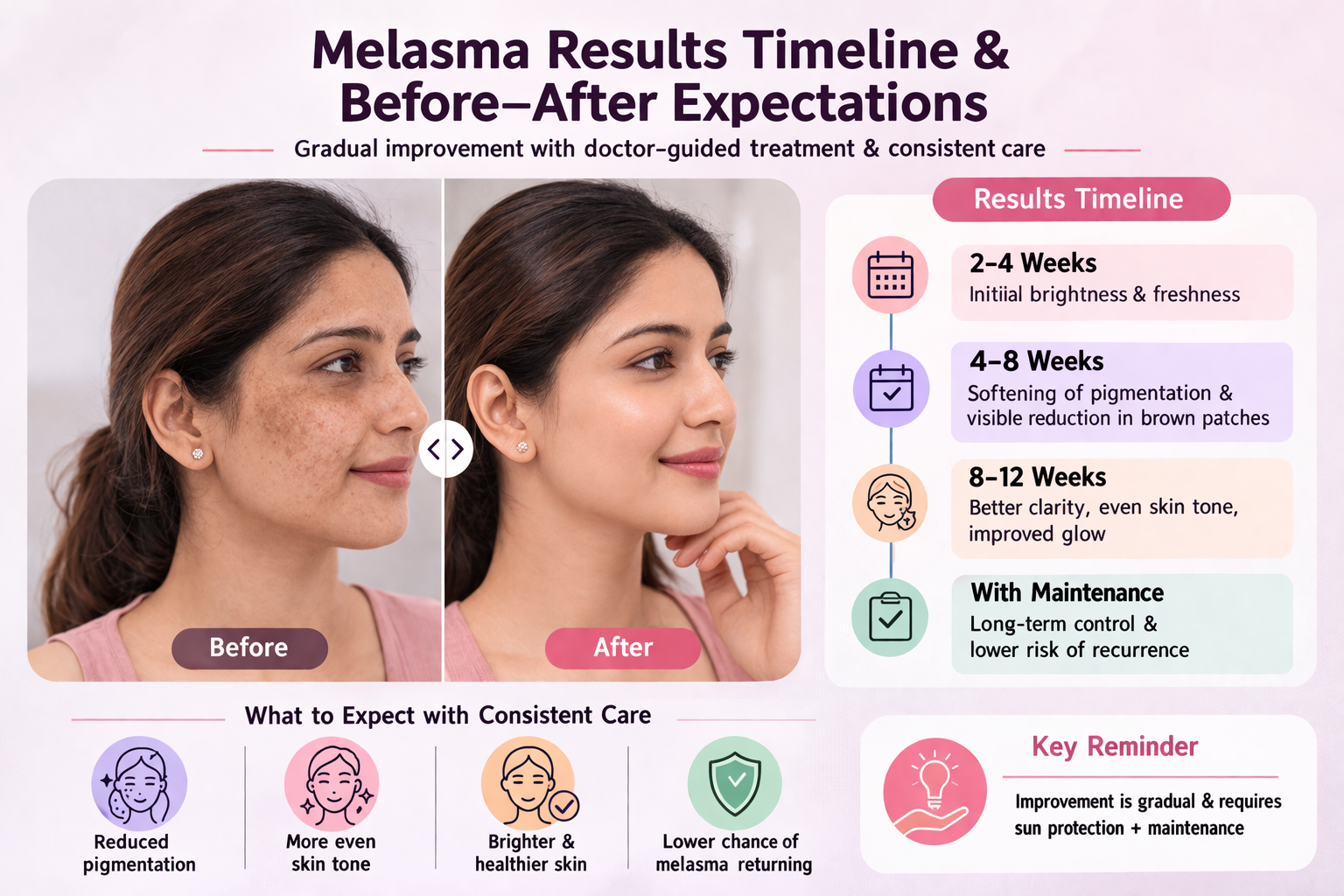
When results begin
Melasma results are usually gradual. Some people see early brightness or mild softening of pigmentation within a few weeks, especially when they follow sunscreen and skincare advice carefully. Deeper or long-standing melasma can take longer.
- Initial visible freshness: often within 2 to 4 weeks
- Pigmentation softening: usually over multiple weeks or sessions
- Better overall clarity: with continued skin protection and maintenance
- Best realistic improvement: often gradual rather than dramatic in one sitting
What realistic before and after expectations look like
The ideal expectation is improvement, not perfection. In melasma, even strong improvement can still require maintenance because the condition may come back with sun exposure, hormonal shifts or poor skincare habits.
- Before treatment: visible facial pigmentation, uneven tone and cosmetic frustration
- After proper treatment: softer patches, clearer tone, brighter appearance and improved confidence
- With maintenance: better control over recurrence
- Without maintenance: higher chance of pigmentation returning
Honest consultation is important because promises of total permanent removal can be misleading in melasma care.
9. Recovery, Downtime and Aftercare
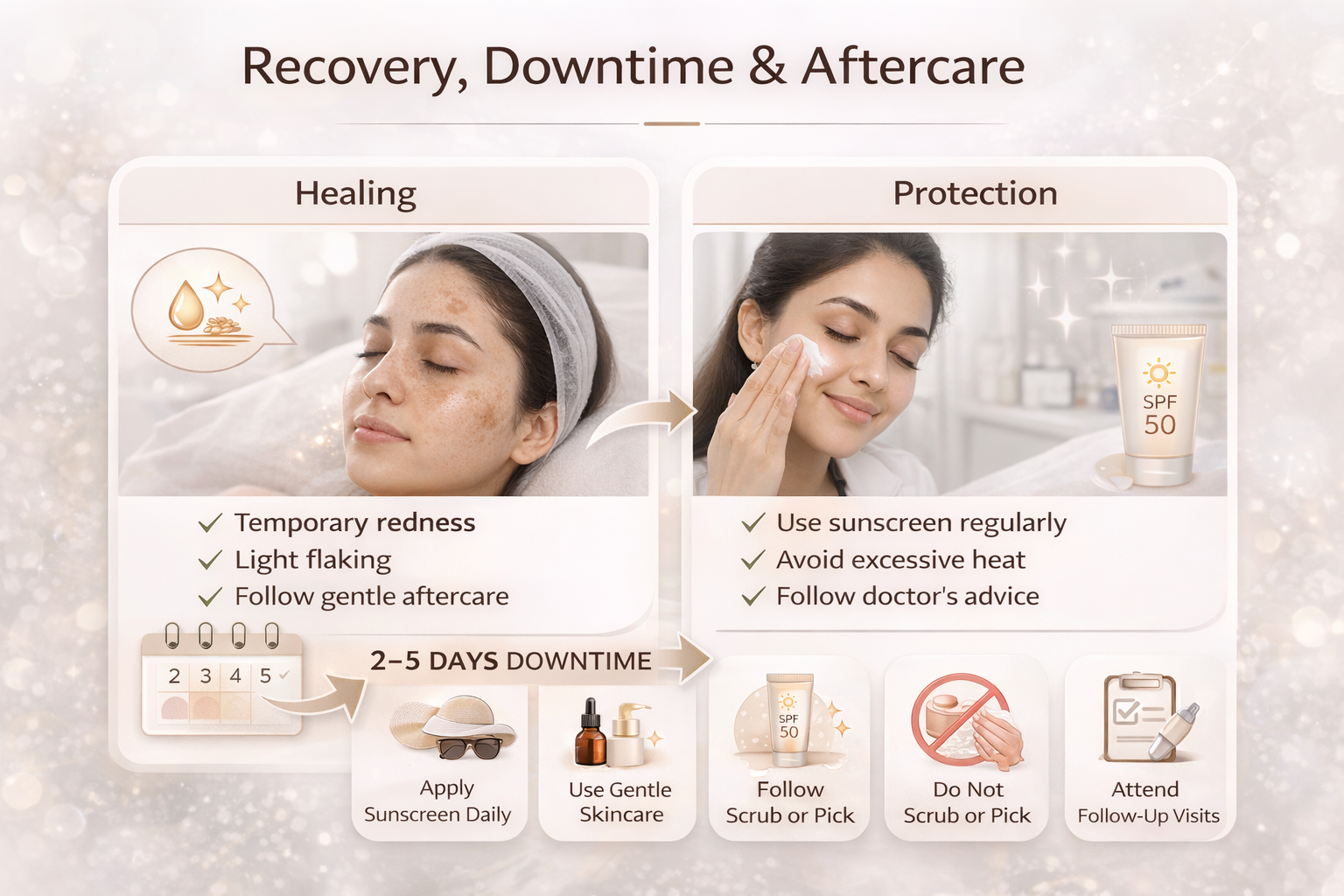
Healing and downtime expectations
Recovery depends on the type of treatment used. Some patients have very little downtime. Others may experience mild redness, temporary dryness, tightness or light flaking for a few days. The purpose of aftercare is to help the skin recover safely and reduce the risk of irritation-related pigmentation.
- Mild redness may occur for a short period
- Light flaking can happen after some procedures
- Skin may feel dry or sensitive temporarily
- Most people can return to routine activities with precautions
How to protect and maintain results
Aftercare is one of the most important parts of melasma management. Even a good in-clinic treatment may fail if the patient does not protect the skin afterwards.
- Use sunscreen regularly and generously
- Avoid unnecessary heat and direct harsh sunlight
- Use only the skincare advised during recovery
- Do not scrub, pick or over-exfoliate
- Follow review advice and maintenance schedule
Good aftercare supports pigmentation treatment results and also contributes to healthier-looking skin overall.
10. Side Effects, Risks and Safety
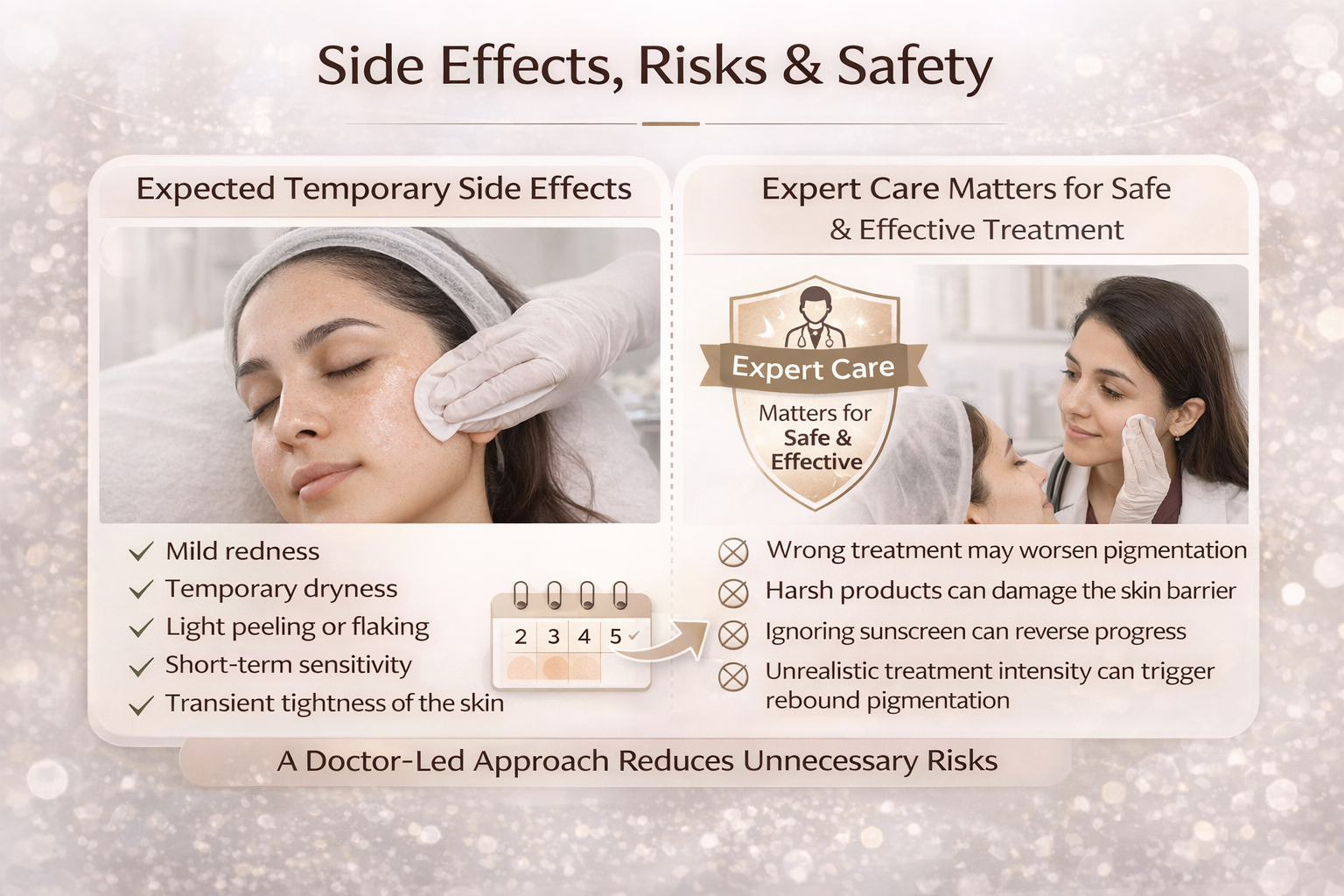
Expected temporary side effects
Like many aesthetic procedures, melasma treatment can have temporary side effects depending on the method used and individual skin sensitivity.
- Mild redness
- Temporary dryness
- Light peeling or flaking
- Short-term sensitivity
- Transient tightness of the skin
Why expert guidance matters for safety
The biggest risk in melasma is often not the clinic treatment itself but incorrect self-treatment, excessive peeling or unsafe product combinations. Because pigmentation-prone skin can worsen with irritation, safety depends on proper selection and restraint.
- Wrong treatment may worsen pigmentation
- Harsh products can damage the skin barrier
- Ignoring sunscreen can reverse progress
- Unrealistic treatment intensity can trigger rebound pigmentation
A doctor-led dermatologist guided treatment approach helps reduce unnecessary risk and supports more responsible decision-making.
11. Treatment Cost Factors and Why Choose Dr. Shabnam Sharjil
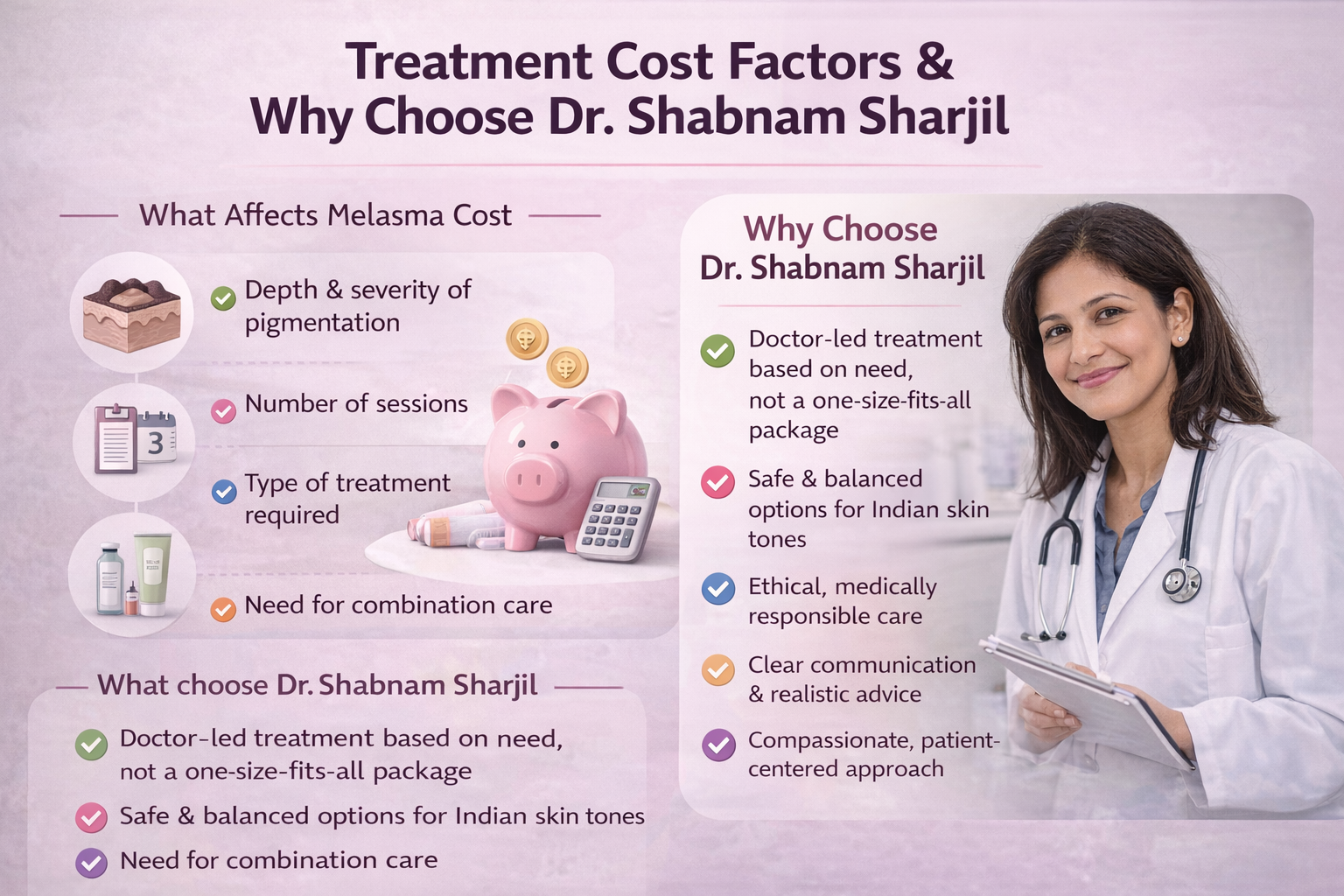
What affects melasma treatment cost
The cost of melasma treatment depends on what your skin actually needs. Since no two cases are exactly the same, the total cost may vary based on severity, sensitivity, type of treatment chosen and the need for repeated sessions or maintenance care.
- Depth and extent of pigmentation
- Number of sessions needed
- Whether topical care alone is enough or procedures are required
- Need for combination treatment
- Level of follow-up and maintenance planning
During consultation, the focus is not only on cost but on choosing the right treatment intensity for your skin. This helps avoid wasted money on unsuitable procedures.
Why choose Dr. Shabnam Sharjil and PCOS Ferticure Clinic
Choosing the right clinic matters because melasma requires judgment, patience and honest guidance. At PCOS Ferticure Clinic, the approach is centered on safe, customized and medically responsible care rather than exaggerated cosmetic claims.
- Doctor-led aesthetic evaluation
- Focus on skin sensitivity and long-term outcomes
- Personalized planning instead of generic treatment packages
- Guidance on sunscreen, skincare and maintenance
- Ethical counselling about realistic expectations
- Suitable options for people seeking skin rejuvenation and pigmentation treatment together
Whether your concern is mild facial pigmentation or long-standing melasma that has resisted multiple creams, consultation with Dr. Shabnam Sharjil helps bring clarity to the next step.
12. Frequently Asked Questions and Conclusion
Frequently Asked Questions
Is melasma permanent?
Melasma can be controlled and improved significantly, but it may recur. This is why maintenance and sun protection are important.
Can sunscreen alone treat melasma?
Sunscreen alone may not remove existing melasma, but it is one of the most important parts of preventing worsening and supporting treatment results.
Are chemical peels useful for melasma?
In selected patients, chemical peels can be useful as part of a structured plan. They must be chosen carefully because not every peel suits every skin type or severity of pigmentation.
How many sessions are needed?
The number of sessions varies. Some people need a few focused sessions plus home care, while others require a longer maintenance strategy.
Can melasma come back after treatment?
Yes, melasma can return, especially with sun exposure, heat, hormonal shifts or poor aftercare. This is why long-term guidance matters.
Is melasma treatment painful?
Most medically selected treatments are generally tolerable. Some procedures may cause mild stinging or temporary sensitivity depending on the method used.
Will treatment also improve skin glow?
Many patients notice better skin clarity and brightness as pigmentation reduces and the skin routine becomes healthier. This can support overall skin rejuvenation.
Can men get melasma treatment too?
Yes. Although melasma is more common in women, men can also develop facial pigmentation and may benefit from medical evaluation and treatment.
Building a practical, sustainable plan for clearer skin
Melasma treatment works best when it is realistic, consistent and medically guided. The skin does not usually change overnight, and aggressive shortcuts can create more problems than progress. A better path is one that respects your skin type, your lifestyle, your triggers and your long-term goals.
At PCOS Ferticure Clinic, Dr. Shabnam Sharjil focuses on helping patients understand their pigmentation clearly so that treatment decisions feel informed rather than confusing. Whether you are dealing with mild facial patches, post-pregnancy pigmentation, recurrent sun-triggered melasma or general uneven skin tone, the right plan can help the skin look clearer, brighter and healthier over time.
If you are looking for melasma treatment in Delhi, a trusted aesthetic skin clinic, medically responsible pigmentation treatment and consultation that prioritizes skin safety, consider booking an appointment with Dr. Shabnam Sharjil. The right treatment is not just about lightening dark patches. It is about building a smarter routine, choosing the right procedures and protecting your skin so results can last longer.
Related Aesthetic Treatments
Patients interested in anti aging procedures often explore additional aesthetic treatments depending on their skin concerns such as pigmentation, dull skin tone, hair thinning, or under-eye darkness.
Book An Appointment
Other Important Articles on Site
PRP Therapy Under Eyes
PRP Facial Treatment
Learn more about PRP Facial Treatment and how it relates to women's health and PCOS management.
Read morePRP Hair Treatment
Learn more about PRP Hair Treatment and how it relates to women's health and PCOS management.
Read morePRP Vampire Facial
Learn more about PRP Vampire Facial and how it relates to women's health and PCOS management.
Read moreChemical Peeling Facial
Learn more about Chemical Peeling Facial and how it relates to women's health and PCOS management.
Read moreSkin Whitening & Brightening Treatment
Learn more about Skin Whitening & Brightening Treatment and how it relates to women's health and PCOS management.
Read moreRATINGS AND REVIEWS RECEIVED ON DIFFERENT PLATFORMS
PCOS Treatment in Delhi (PCOS VIdeo Consultation:)

4.8 out of 5 (189 reviews and ratings)
PCOS Specialist in Delhi (PCOS Video Consultation:)
Practo
99% (277 reviews and ratings)
Top PCOS Doctors in Delhi (PCOS Video Consultation:)
Lybrate

4.4 (642 reviews and ratings)
PCOS Treatment for Un-Married (Polycystic Ovary Doctor In Delhi)
Just Dial
4.9 (490 reviews and ratings)
Services Provided at PCOS Ferticure Clinic
- PCOS Treatment in Delhi
- PCOS Treatment
- PCOS Symptoms and Treatment
- PCOS Treatment for Unmarried
- PCOS treatment in unmarried
- PCOS specialist doctor
- PCOS specialist in delhi
- Top PCOS Dcotor in delhi
- Which doctor to consult for PCOS
- PCOS Diagnosis In Delhi
- Book online appointment